
Choosing the right supplements is often a challenge for women who want to improve their daily health and energy. The balance between physical and mental well-being depends not only on diet, but also on getting the necessary nutrients that are sometimes missing. The article presents what types of supplements are, how they support women's health and what to pay attention to when choosing them, so that you feel confident and informed every day.
Contents
- What are dietary supplements?
- Main types and specific beneficial substances
- How supplements support women's physical and mental health
- Legal requirements and control of food additives
- Risks, interactions and errors in taking
Basic extracts
| Point | Details |
|---|---|
| Nutritional supplements supplement dietary intake | They contain concentrated vitamins, minerals and biologically active substances that do not replace, but complement, a complete diet. |
| Consulting an expert is important | Before starting to take supplements, a mandatory consultation with a doctor or nutritionist is recommended. |
| Regulations in the European Union | There are strict legal requirements for the safety and labeling of food supplements in the EU. |
| Risks of improper intake | Incorrectly combining and self-prescribing supplements can lead to health complications. |
What are dietary supplements?
Dietary supplements are specific products designed to supplement and improve the body's daily nutritional intake. They contain concentrated nutritional ingredients such as vitamins, minerals, herbs, amino acids and other biologically active substances that are taken outside of the standard diet.
The main purpose of nutritional supplements is to compensate for possible nutritional deficiencies and to support the overall health of the body. They can be taken in various forms - capsules, tablets, powders, liquids or syrups. In women, they are especially useful for replenishing lost nutrients during various physiological periods such as pregnancy, the menstrual cycle or menopause.
The use of dietary supplements has increased significantly over the past two decades due to the growing interest in health promotion and prevention. It is important to understand that supplements do not replace a complete diet, but rather supplement it by providing specific nutrients that may be lacking in the daily diet.
Pro tip: Always consult a doctor or nutritionist before starting a regular intake of nutritional supplements to determine exactly what nutrients you need.
Main types and specific beneficial substances
Dietary supplements include a wide range of specific nutrients that are extremely important for maintaining women's health. The main categories include vitamins, minerals, herbal extracts, amino acids and specialized nutritional ingredients, each of which performs a unique role in the body.
Among the most common types of supplements for women are multivitamin complexes, which contain a combination of essential vitamins such as B vitamins, vitamin D, vitamin E, and minerals such as iron, calcium, and zinc. These nutrients are critically important for maintaining energy metabolism, bone density, the immune system, and reproductive health. Specific supplements can be targeted at different physiological periods such as pregnancy, menopause, or periods of intense physical exertion.
Bioactive substances in dietary supplements support overall health by providing deficient nutrients that cannot be obtained through a standard diet alone. For example, omega-3 fatty acids are extremely beneficial for the cardiovascular system, while collagen supports healthy skin, joints and hair. Herbal supplements such as ginseng, maca or turmeric offer additional benefits for hormonal balance and general well-being.
Pro tip: Before you start taking any nutritional supplement, be sure to consult a doctor or specialist who can determine exactly what nutrients you need according to your individual health profile.
Here is a brief comparison of the main categories of dietary supplements and sample benefits for women's health:
| Additive category | Main action | Example benefit |
|---|---|---|
| Vitamins | Supports metabolism | Improves energy |
| Minerals | Strengthens bones and teeth | Reduces the risk of osteoporosis |
| Omega-3 fatty acids | Supports the brain and heart | Promotes concentration |
| Adaptogens | Regulates stress | Harmonizes hormones |
| Collagen | Supports skin and joints | Improves skin elasticity |
How supplements support women's physical and mental health
Nutritional supplements play a key role in maintaining women's health during different physiological periods. They are specifically designed to support the body through targeted nutrients that compensate for metabolic needs and support hormonal balance.
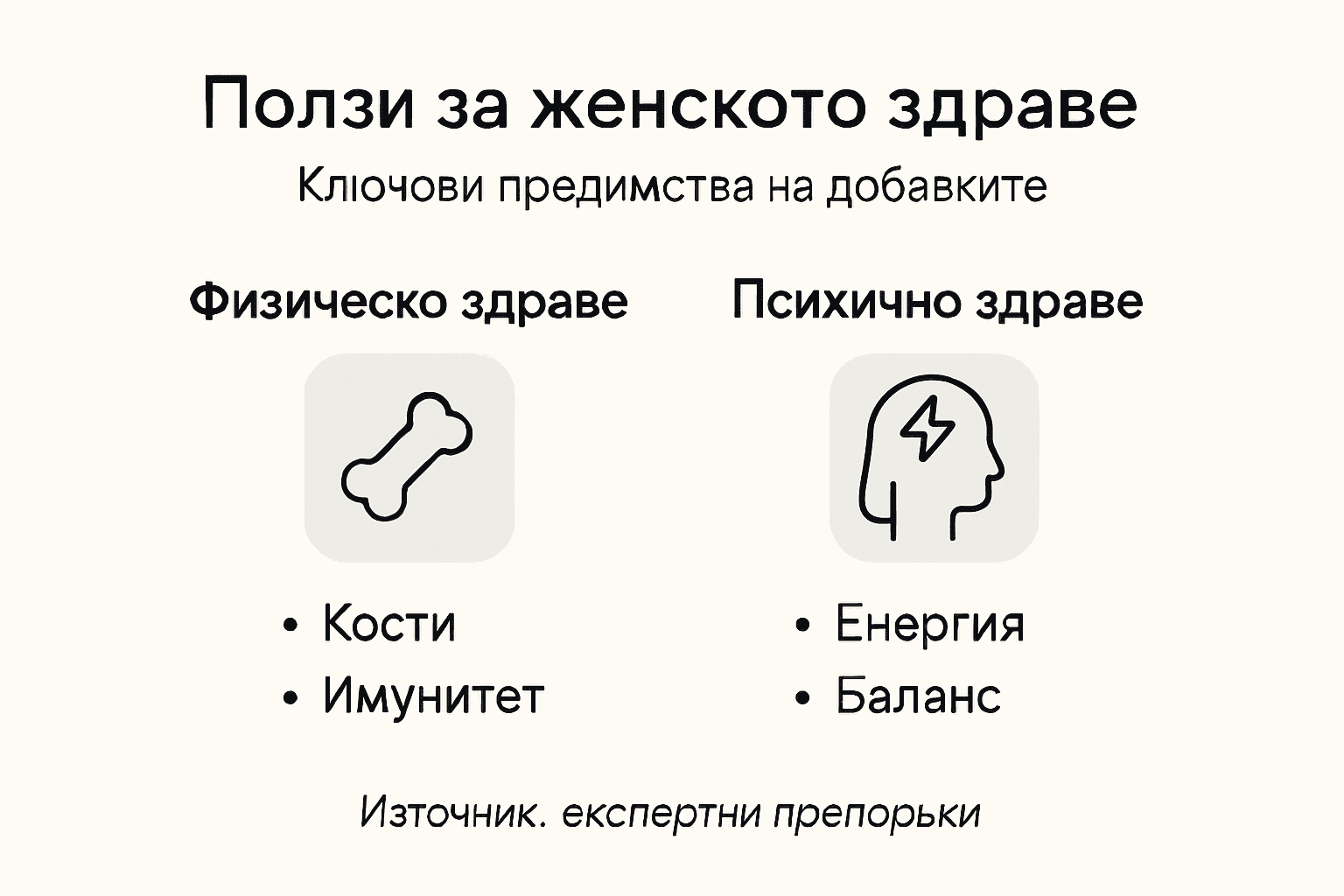
In physical health, supplements focus on strengthening the immune system, improving bone density and muscle tone. Vitamin D, calcium, magnesium and iron are especially important for women, as they support reproductive health, prevent anemia and reduce the risk of osteoporosis. In intense physical exertion, protein and amino acid supplements can help with recovery and muscle growth.

Mental health is also greatly influenced by the right nutritional intake , with some nutrients having proven effects on reducing stress and improving cognitive function. Omega-3 fatty acids, magnesium, B vitamins, and adaptogens like ginseng can support emotional stability, memory, and concentration, especially during hormonal changes such as the menstrual cycle or menopause.
Pro tip: Consult a gynecologist or endocrinologist who can make an individual assessment of your nutritional needs and recommend the most appropriate supplements for your body.
Legal requirements and control of food additives
The European Union has strict regulatory mechanisms for food additives to ensure the safety and quality of products reaching consumers. The legislation is harmonised to ensure equally high standards for the production, labelling and control of additives in all European countries.
The main legal requirements include a mandatory assessment of the composition, origin and potential health effects of each food supplement. Manufacturers must provide detailed information on the ingredients used, their origin, concentration and possible side effects. Labeling is another critical aspect - the packaging must necessarily include data on the recommended daily intake, warnings and information on possible contraindications.
Different countries apply specific national regulations on food additives, with the main goal being to protect consumer health. In Bulgaria, control is carried out by the Bulgarian Food Safety Agency, which carries out strict inspections and can stop the distribution of products that do not meet regulatory requirements. It is important for consumers to be informed that not all additives undergo equally strict prior control and they should always check the origin and certificates of the products.
Pro tip: Before purchasing any dietary supplement, check whether it has an official quality certificate and whether it is registered with the Bulgarian regulatory authorities.
Risks, interactions and errors in taking
The use of dietary supplements carries a number of potential risks that require an extremely responsible and informed approach from consumers. Improper intake can lead to serious health complications, especially when supplements are combined unwisely or without prior consultation with a medical professional.
The most common mistakes include self-prescribing supplements without medical advice, exceeding recommended doses, and taking multiple products at the same time, which can interact in unexpected ways. For example, some herbal supplements can dramatically affect the action of certain medications, reducing their effectiveness or causing unwanted side effects.
Supplement-drug interactions pose a particularly serious risk for women taking regular medication. For example, ginseng supplements can alter blood pressure, while vitamin K can reduce the effectiveness of blood thinners. Women with chronic conditions, such as diabetes, cardiovascular problems, or hormonal disorders, are especially vulnerable to such interactions.
Pro tip: Keep an accurate list of all supplements and medications you take and show it to your doctor at every consultation to prevent potential risky interactions.
This table summarizes the main risks of taking dietary supplements and sample ways to prevent them:
| Main risk | A sample consequence | How to avoid it |
|---|---|---|
| Overdose | Toxicity or side effects | Follow the recommended dosage. |
| Interaction with medications | Reduced effectiveness of medications | Consult a doctor. |
| Uncontrolled product | Unclear composition or harmful substances | Buy from verified sources |
Support your women's health with the right supplements today
The female body requires special attention and support, especially during hormonal changes and stress. Key nutrients like vitamin D, iron, and adaptogens are essential for a full life and balance. If you are wondering how to compensate for deficiencies and improve energy, this is your place for reliable solutions.
Browse the wide selection of over 30,000 products in the FeelYou dietary supplements category and discover exactly what your body is looking for. Each formula is designed to meet the specific needs of women of different ages and stages. Enjoy the variety of vitamins, minerals and specialized extracts for comprehensive support of the body and spirit. Don't put off taking care of yourself, start now with FeelYou and feel the difference.
Frequently Asked Questions
What are the benefits of nutritional supplements for women's health?
Dietary supplements offer a variety of benefits, including supporting reproductive health, strengthening bone density, and improving the immune system. They provide deficient nutrients that support energy metabolism and hormonal balance.
Which essential nutrients are important for women and what supplements should we choose?
Essential nutrients include B vitamins, vitamin D, calcium, and iron. Multivitamins and specific supplements targeted at specific physiological periods can be extremely helpful.
How do supplements affect women's mental health?
Some nutrients, such as omega-3 fatty acids and B vitamins, have been shown to reduce stress and improve cognitive function, having a beneficial impact on women's mental health, especially during periods of hormonal changes.
What should I know before I start taking nutritional supplements?
Before starting to take dietary supplements, it is important to consult a doctor or nutritionist who can help determine individual needs and prevent potential risks of drug interactions.